Running Shoes vs Walking Shoes: What's the Real Difference? (Complete Guide for Men)
Standing in a shoe store, staring at a wall of sneakers, you have probably wondered: do I really need different shoes for running and walking? They look similar, they feel similar on the foot, and many brands price them almost the same. So is the running shoes vs walking shoes debate just clever marketing?
Not quite. While both protect your feet, they are built for two very different movements. A mismatched pair often means aching knees, shin splints, or blisters, and even an easy session can start to feel like hard work.
In this guide, we break down the difference between running shoes and walking shoes, explain how each is engineered, and help you decide whether running shoes or walking shoes fit your routine. We also cover what to look for in sports shoes for men and how to pick the best running sneakers for men for your budget and goals.
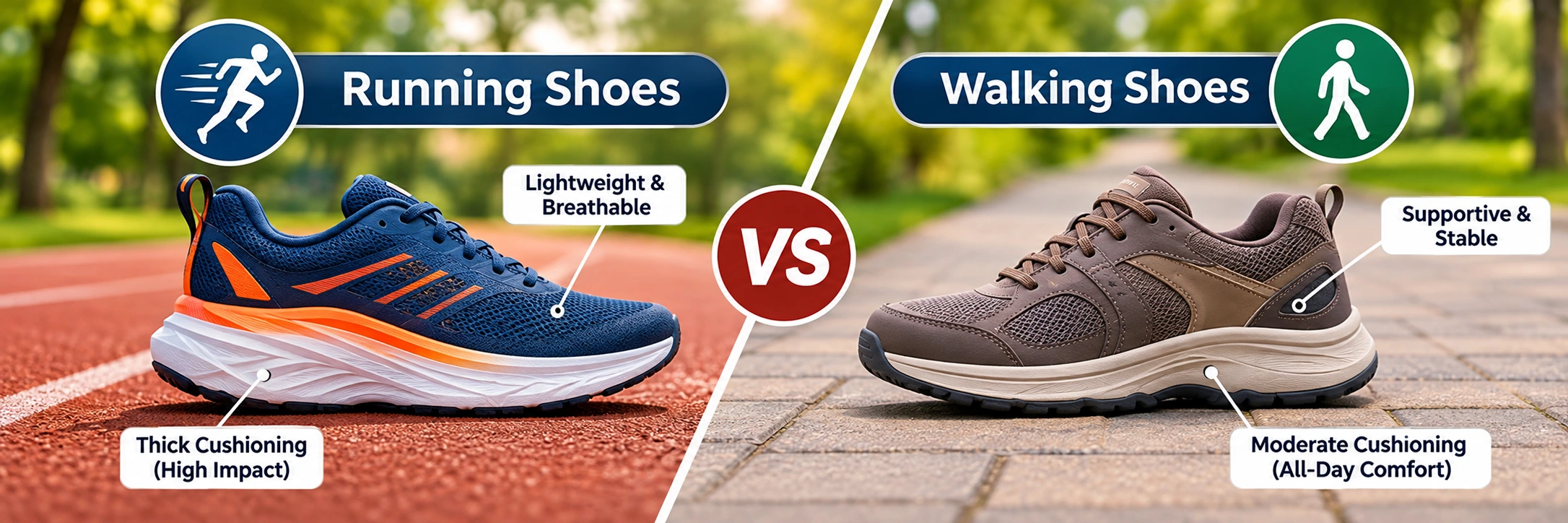
The Quick Answer: Running Shoes vs Walking Shoes
If you want the short version, here it is. Running shoes are built to absorb heavy impact, offer thick cushioning (especially in the heel and forefoot), and keep your stride light and fast. Walking shoes are built for stability, smooth heel-to-toe rolling, and all-day comfort at a lower impact level.
The reason is simple physics. When you run, each footstep sends a force of roughly two to three times your body weight through your leg. When you walk, that force is only about one to one-and-a-half times your body weight. Your shoes need to be designed around that difference.
Understanding How Your Foot Moves
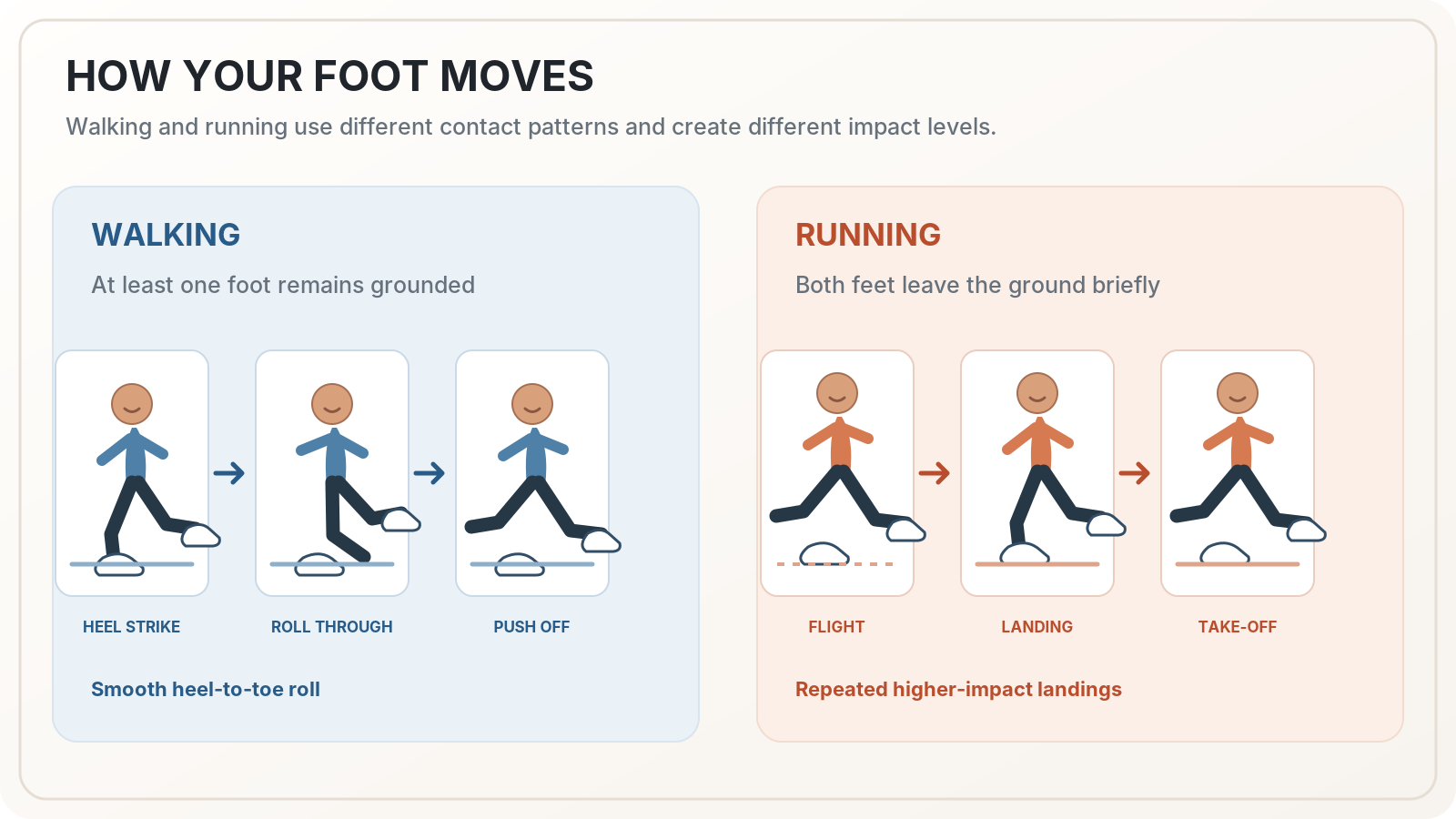
To understand why the two types of shoes differ, you first need to understand how your foot behaves in each activity.
When walking, your heel strikes the ground first, and your foot rolls smoothly forward from heel to toe before pushing off. At least one foot is always touching the ground, so the impact is gentle and spread out.
When running, there is a moment in every stride where both feet are off the ground. You land with much more force, often on the midfoot or forefoot (though many runners still heel-strike), and your body must absorb that shock repeatedly, thousands of times per run.
Walking shoes are designed to support the first movement. Running shoes are designed to survive the second.
Key Differences Between Running Shoes and Walking Shoes
1. Cushioning
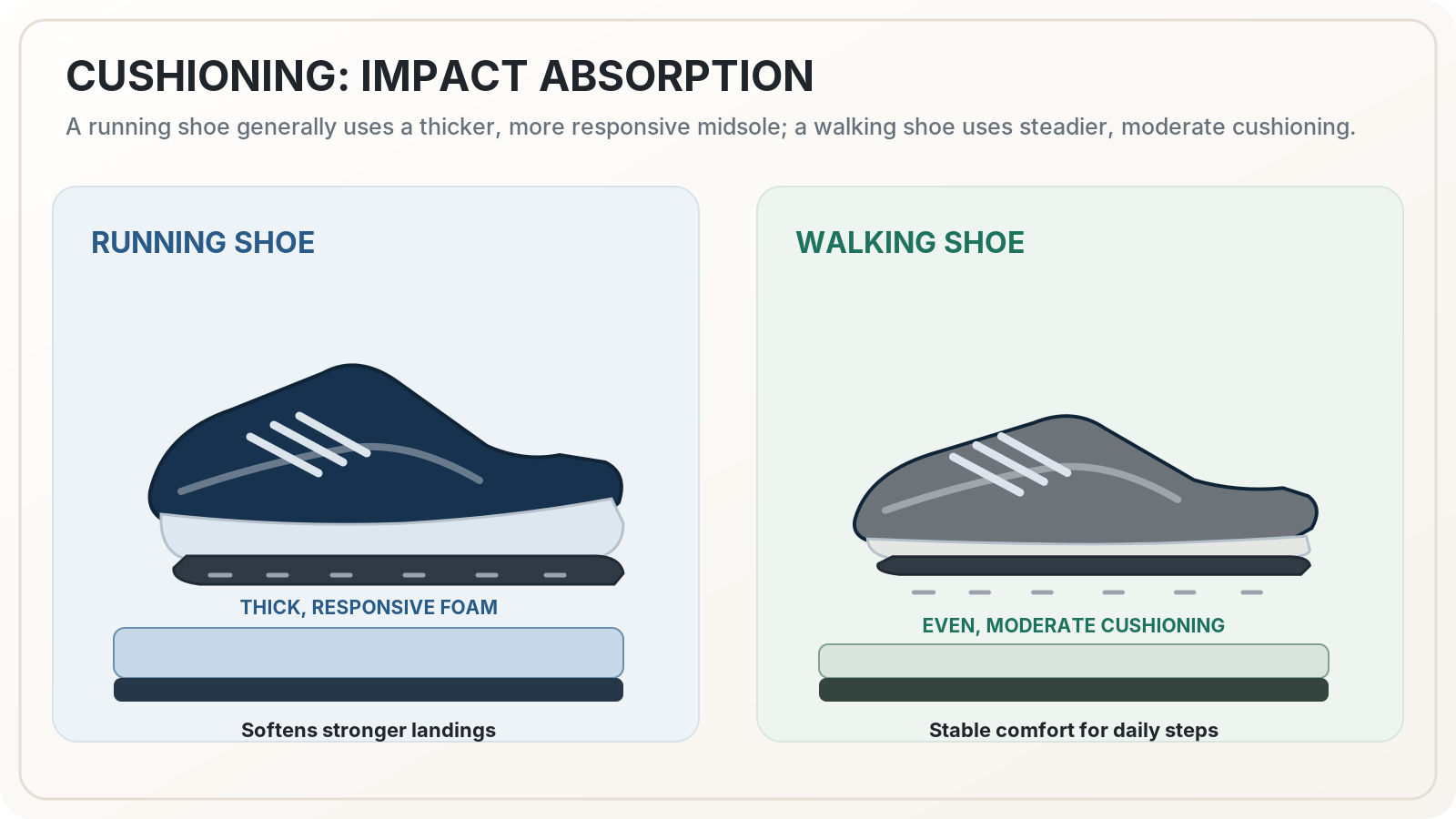
Cushioning is the biggest difference. Running shoes use thick, responsive midsole foam (often EVA, TPU, or advanced super-foams) to soften the landing and return energy with each step. The cushioning is usually concentrated in the heel and forefoot, where impact is highest.
Walking shoes use moderate, more evenly distributed cushioning. You still get comfort, but with a firmer, more stable feel, because walking does not demand heavy shock absorption.
2. Heel-to-Toe Drop and Heel Design
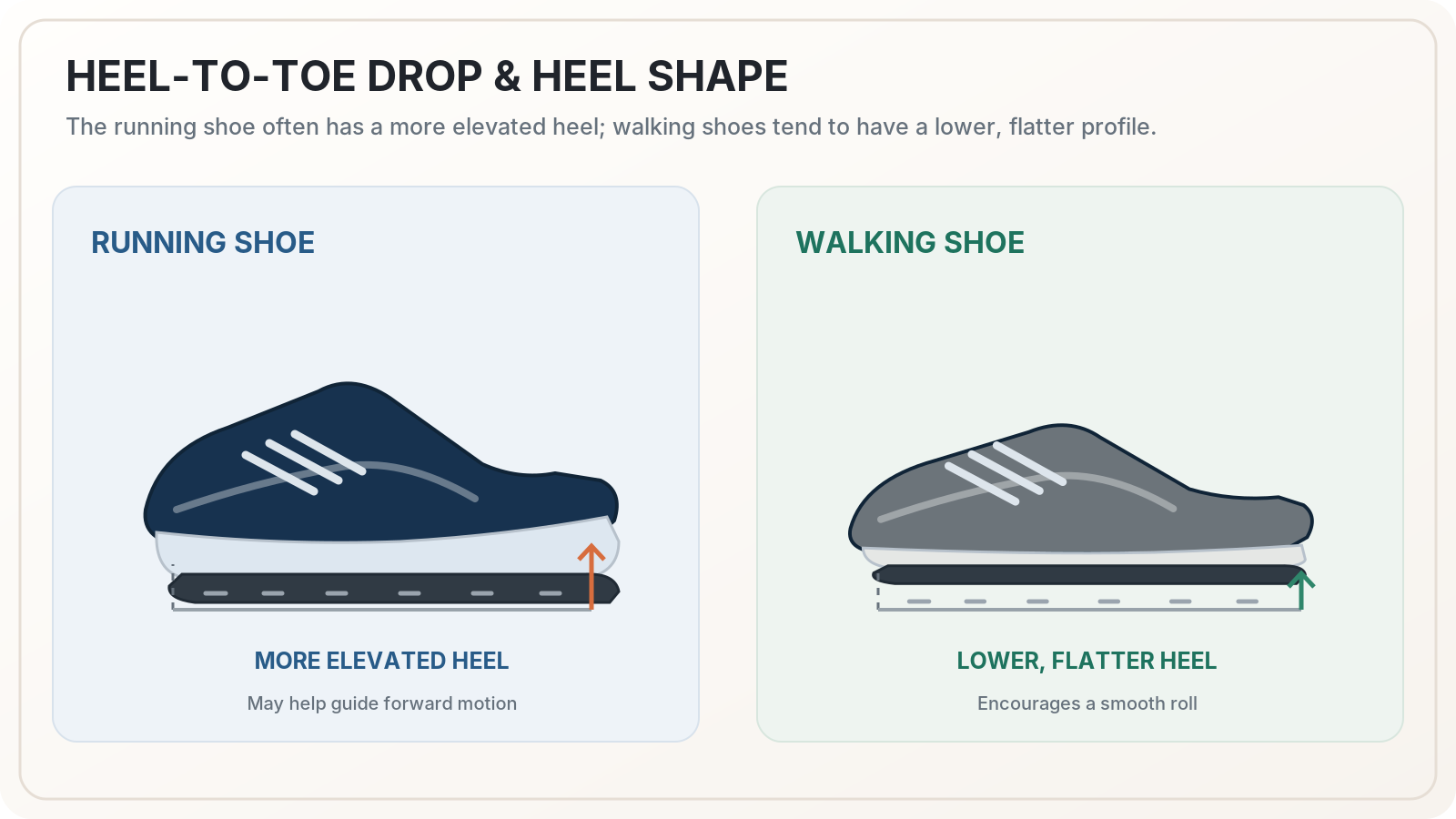
Running shoes typically have a higher heel-to-toe drop (around 8 to 12 mm) and a thicker, slightly elevated heel to help propel you forward. Some modern models have a lower drop for a more natural stride.
Walking shoes have a lower, flatter heel. Many also feature a slightly beveled or rounded heel edge, which encourages a smooth roll from heel strike to toe-off. A very thick running heel can actually make walking feel unstable and clunky.
3. Flexibility
Walking involves a deep roll through the foot, so walking shoes are designed to bend easily at the ball of the foot. Running shoes tend to be a bit stiffer through the midsole to give you a firm launch with each stride and to protect your foot from fatigue.
4. Weight
Running shoes are built to be lightweight because every extra gram becomes noticeable over miles. Walking shoes are often slightly heavier because they use sturdier materials for support and durability. For casual walkers, this extra weight is barely noticeable and adds stability.
5. Breathability and Upper Material
Running raises your body and foot temperature much faster than walking. That is why most running sneakers use ultra-light, breathable mesh uppers that keep feet cool and dry. Walking shoes may use a mix of mesh, leather, and synthetic overlays for a more structured, supportive fit.
6. Outsole and Durability
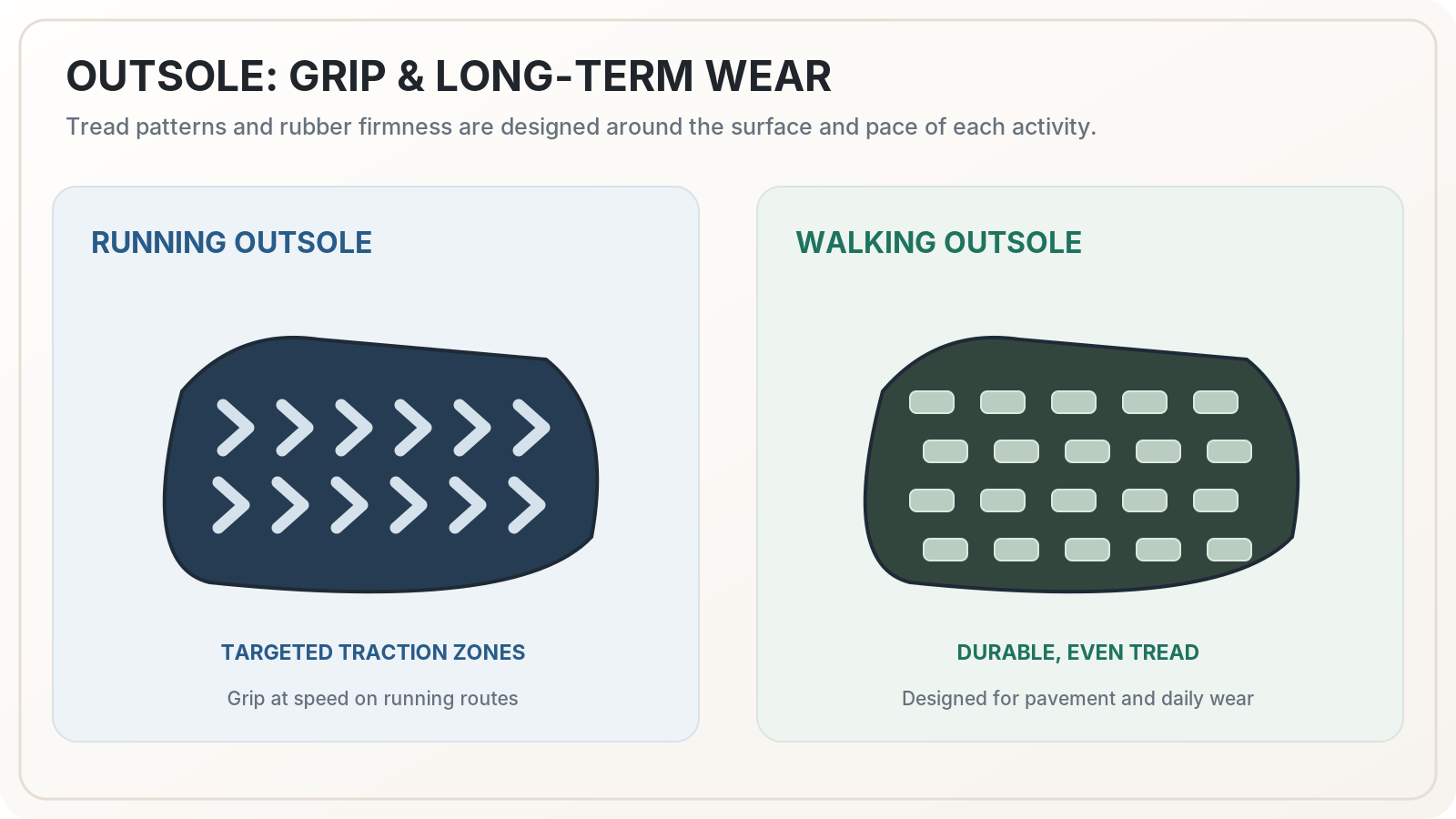
Running shoes often have softer rubber outsoles with targeted traction patterns for grip at speed. Walking shoes tend to use harder, more durable rubber that resists wear on pavement, malls, and office floors, so they last longer with daily use.
Quick Comparison Table
| Feature | Running Shoes | Walking Shoes |
|---|---|---|
| Cushioning | Thick, high-impact absorption | Moderate, even cushioning |
| Heel | Higher, thicker drop | Lower, flatter, often beveled |
| Flexibility | Stiffer midsole | More flexible at forefoot |
| Weight | Very lightweight | Slightly heavier |
| Upper | Light, breathable mesh | Mesh, leather or mixed |
| Best for | Jogging, running, interval training | Daily walks, travel, standing all day |
Running Shoes or Walking Shoes: Which Should You Choose?
The answer depends on how you will actually use them.
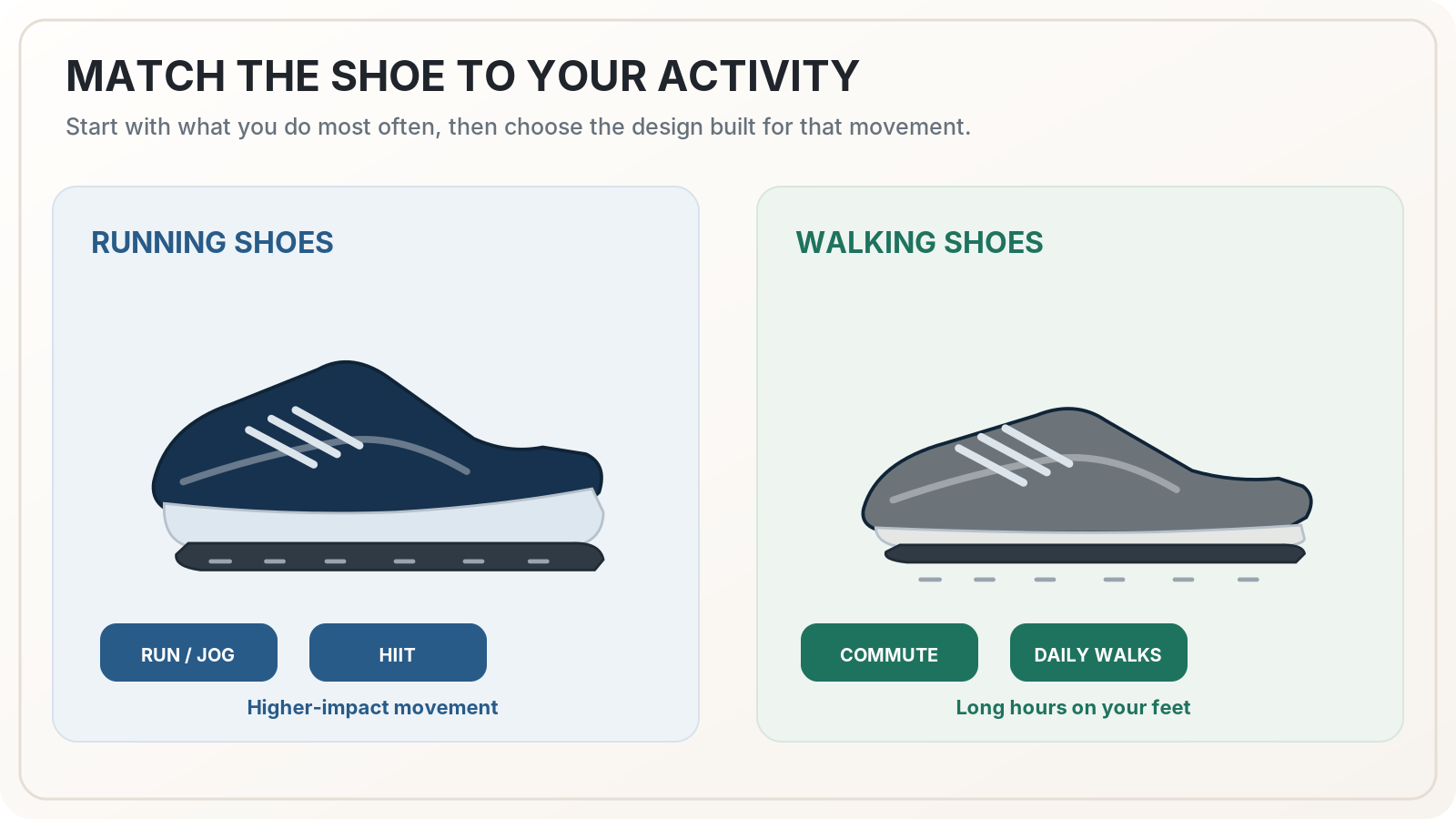
Choose running shoes if you:
- Run or jog even a few times a week.
- Do high-impact workouts such as HIIT, sprints, or treadmill intervals
- Are heavier and want extra shock absorption
- Prefer a soft, bouncy feel underfoot.
Choose walking shoes if you:
- Walk mainly for fitness, commuting, or leisure.
- Spend long hours on your feet at work.
- Want a stable, low-profile, all-day shoe.
- Prefer a more flexible, natural feel.
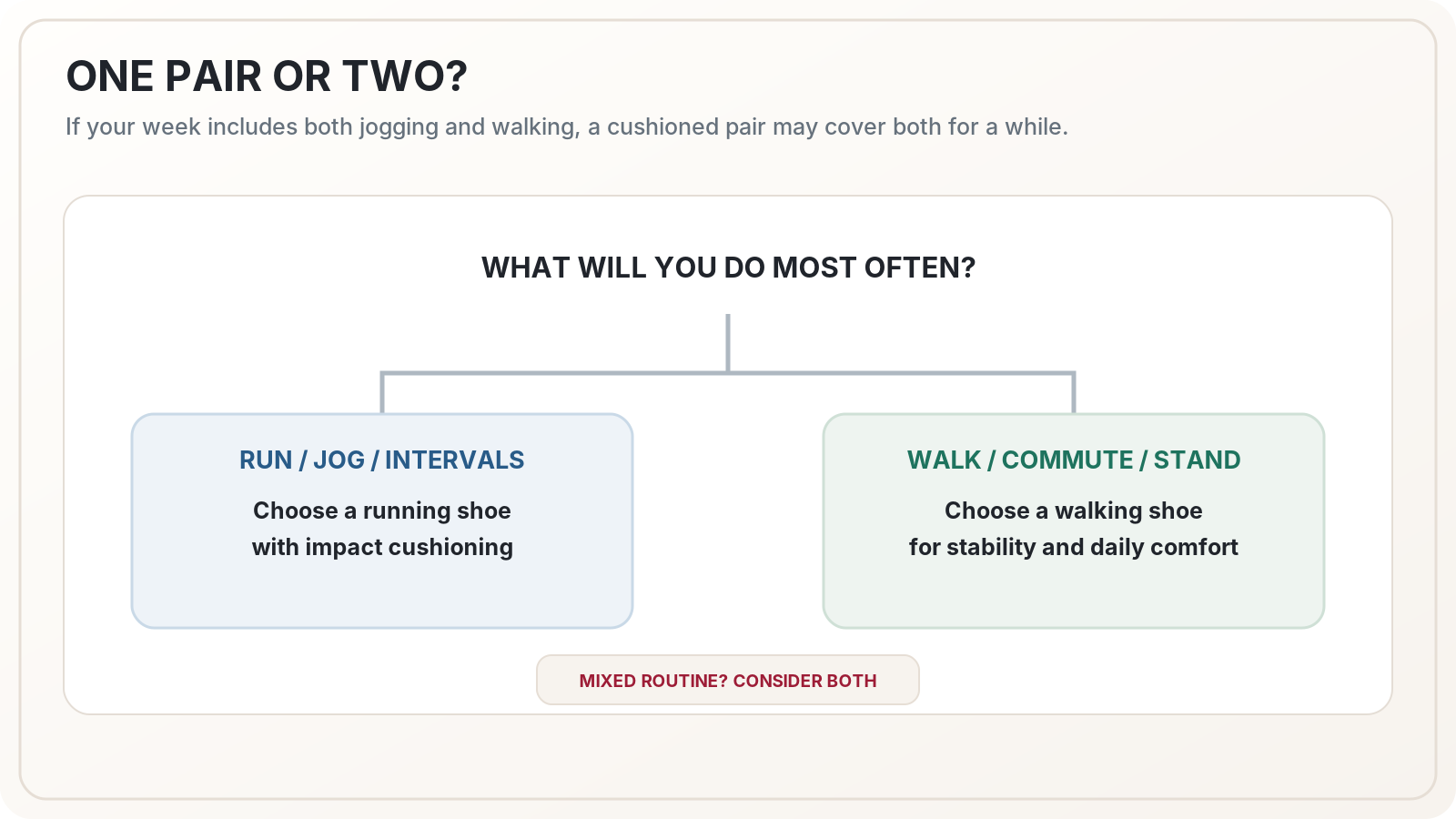
If your week mixes jogging and walking, one well-cushioned pair can cover both for a while. Still, if budget permits, owning a dedicated pair for each activity helps both pairs last longer.
Can You Walk in Running Shoes?
Yes, absolutely. Running shoes are perfectly safe for walking, and many people find the extra cushioning comfortable, especially for long walks or if they have sensitive joints. The only downsides are that the thick heel may feel slightly unstable on uneven ground, and the soft outsole may wear out faster if you use them for everyday walking on rough surfaces.
Can You Run in Walking Shoes?
It is not recommended. Walking shoes lack the cushioning, energy return, and shock absorption needed for running. Using them regularly for runs increases the risk of shin splints, heel pain, plantar fasciitis, and knee discomfort. If you are just starting to jog, invest in a proper pair of running shoes from day one.
What to Look for in Running Sneakers for Men
If you have decided to buy running sneakers for men, keep these points in mind:
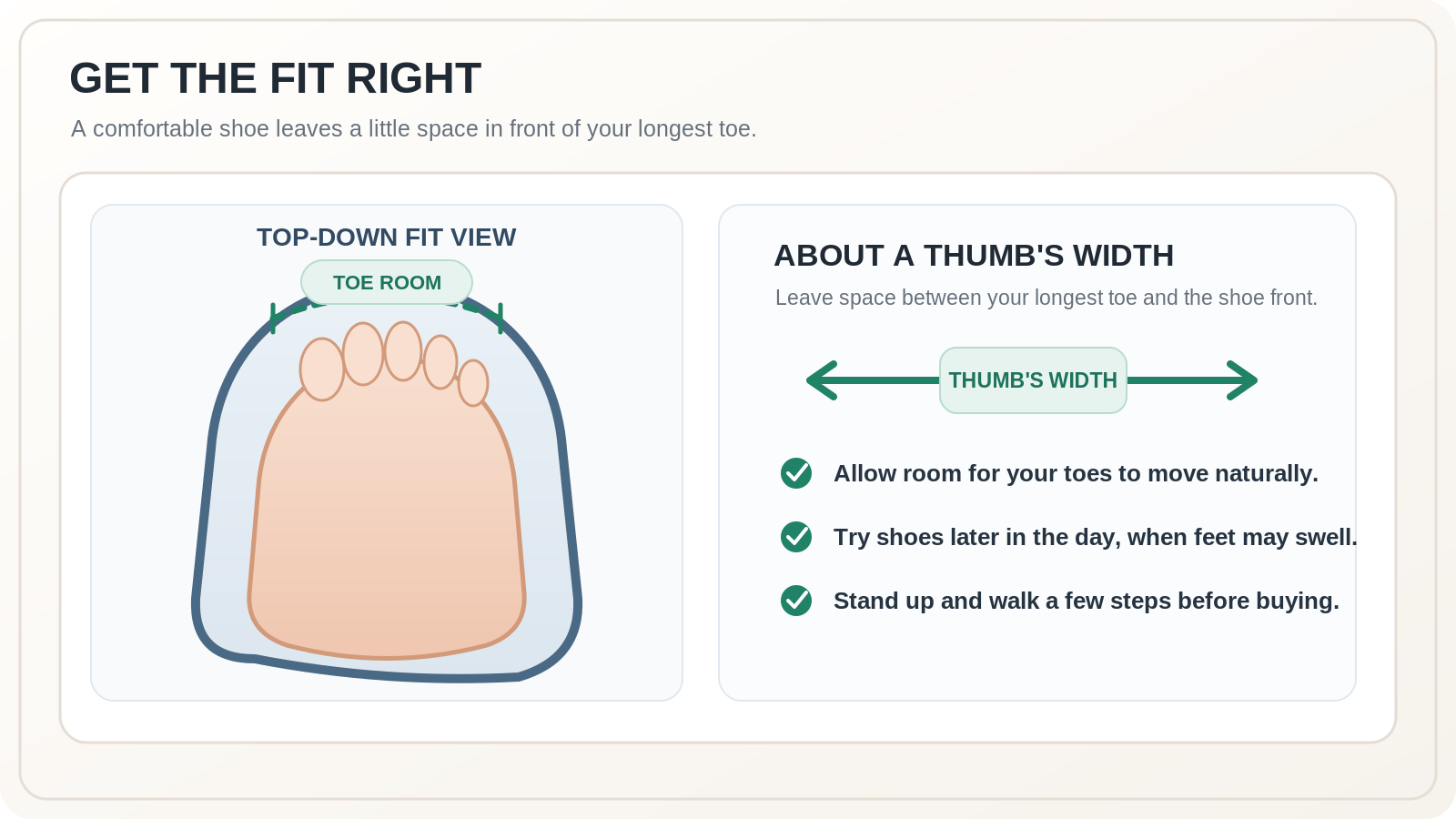
- Fit: Leave about a thumb's width of space in front of your longest toe. Feet swell during runs, so try shoes in the evening.
- Foot type: Know whether you have flat, high, or neutral arches. Stability shoes suit overpronators, while neutral shoes suit most others.
- Running surface: Road shoes are best for pavements and treadmills. Trail shoes offer better grip for dirt and uneven terrain.
- Cushioning level: Beginners and heavier runners often benefit from maximum cushioning, while experienced runners may prefer a lighter, faster feel.
- Breathability: Look for engineered mesh to keep your feet cool, especially in hot Indian summers.
- Budget and durability: Good running shoes usually last 500 to 800 km. Replace them once the midsole feels flat or the outsole is worn smooth.
Choosing the Right Sports Shoes for Men
Sports shoes for men are an umbrella category that includes running, walking, training, cricket, football, and basketball shoes. Each is built for specific movements, so it helps to match the shoe to the activity:
- Running and jogging: cushioned running shoes
- Gym and cross-training: flatter, more stable training shoes
- Daily walking and travel: lightweight walking shoes
- Field sports: sport-specific shoes with the right traction and ankle support
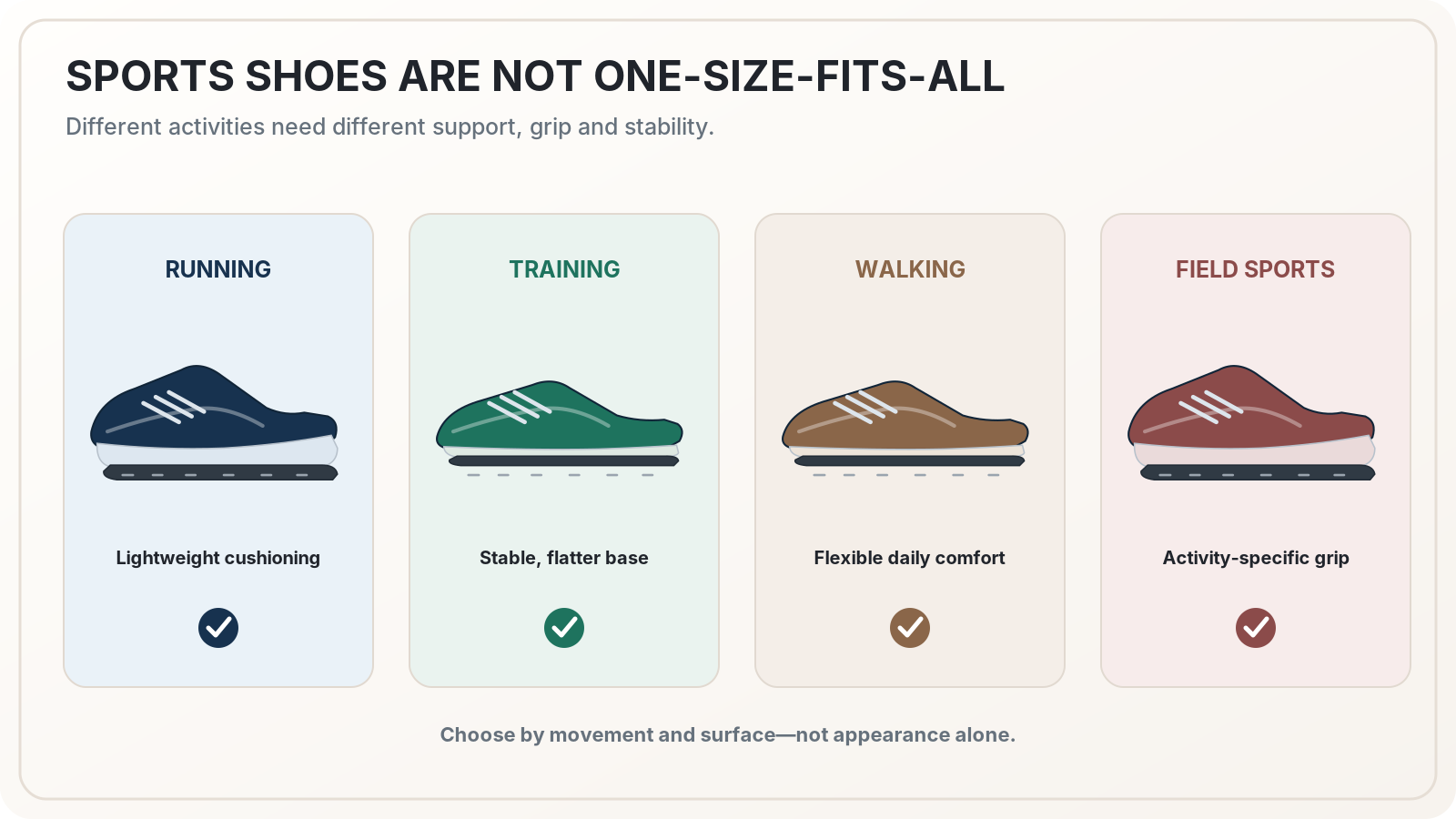
When shopping, don't choose based on looks or brand alone. Prioritize comfort, fit, and purpose. A well-fitted pair of sports shoes protects your joints and improves performance, no matter your fitness level.
Common Mistakes to Avoid
- Buying by looks alone. A stylish pair that does not suit your activity can cause pain.
- Wearing worn-out shoes. Old shoes lose cushioning even if they look fine on the outside.
- Ignoring size changes. Your foot size can change with age and weight, so measure it regularly.
- Using one pair for everything. Rotating shoes lets the foam recover and extends their lifespan.
- Skipping the try-on. Always walk or jog a few steps in the shoes before buying.
Frequently Asked Questions
Are running shoes better than walking shoes? Not necessarily. Running shoes are better for running, and walking shoes are better for walking. The best choice depends on your activity.
Are running shoes suitable for gym workouts? For treadmill running or cardio, yes. For heavy lifting or lateral movements, a flat training shoe is better because cushioned running soles can feel unstable.
How often should I replace my shoes? Running shoes typically need replacing every 500 to 800 km, or about every 6 to 12 months with regular use. Walking shoes often last a little longer.
Do I need special shoes if I have flat feet? Yes, many people with flat feet benefit from stability shoes with good arch support. A specialist or podiatrist can guide you.
Final Thoughts
What separates a running shoe from a walking shoe ultimately comes down to how much impact it handles and how your foot moves. Running designs focus on cushioning, energy return, and low weight, while walking designs focus on stability, flexibility, and everyday comfort. Still unsure whether running shoes or walking shoes suit you better? Look at what you do most often and pick for that.
Whether you are picking sports shoes for men for the gym or the right running sneakers for men for your morning jog, the right pair will keep you comfortable, injury-free, and motivated to stay active. Your feet carry you through every step, so give them the right support.